
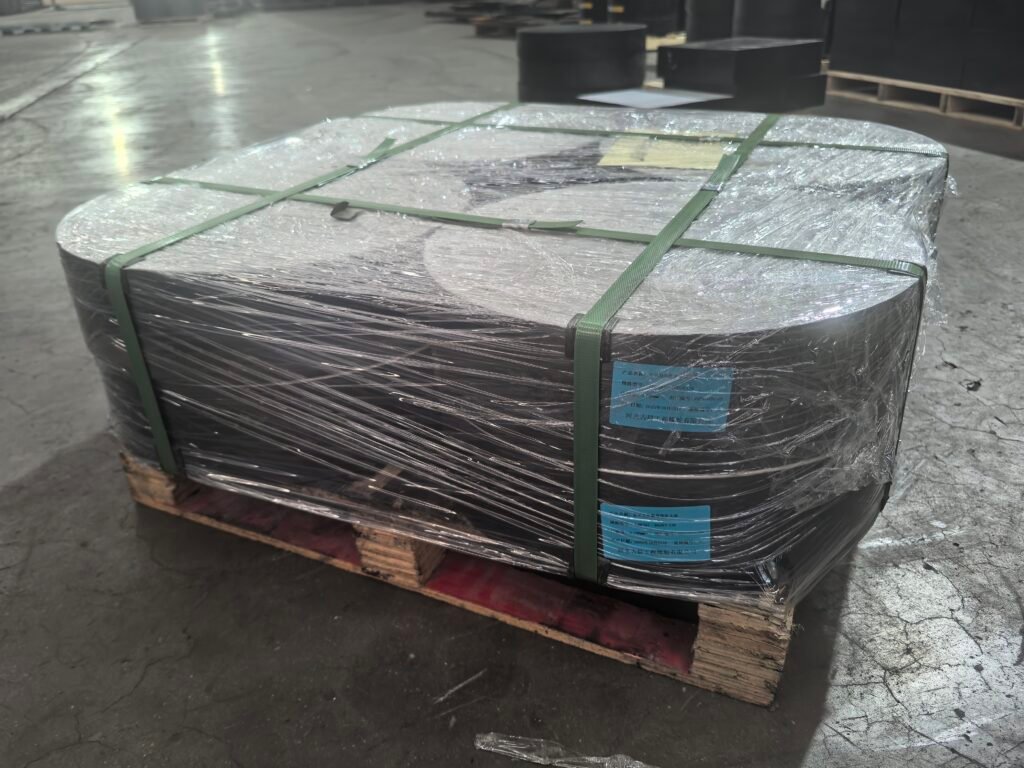
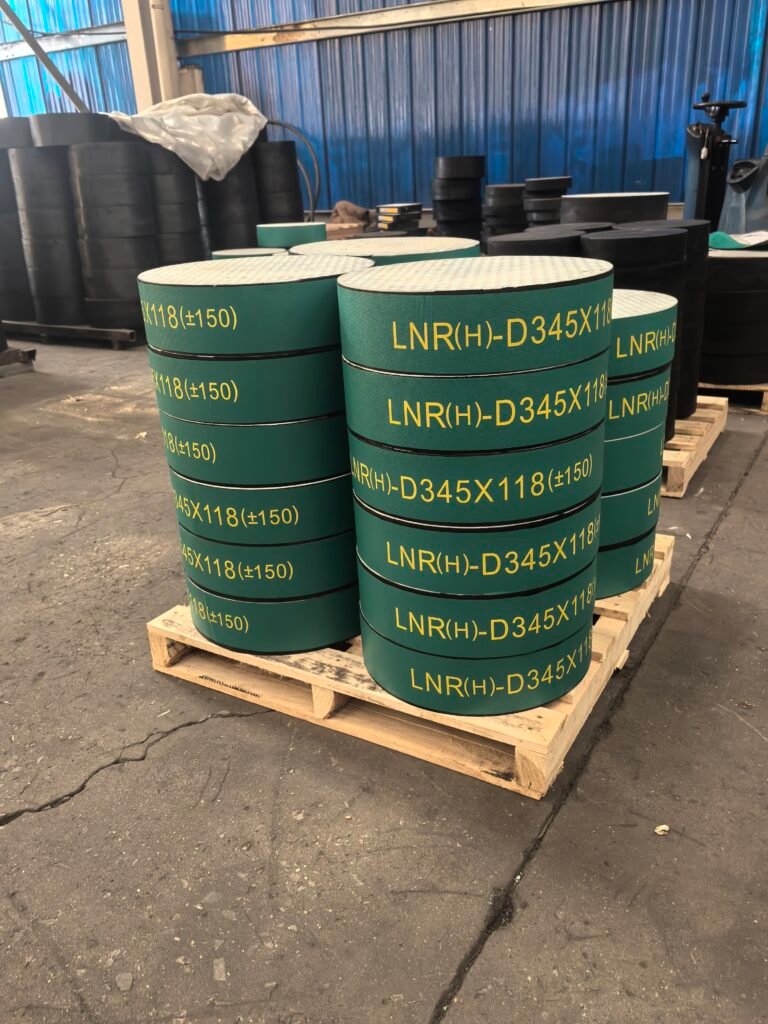
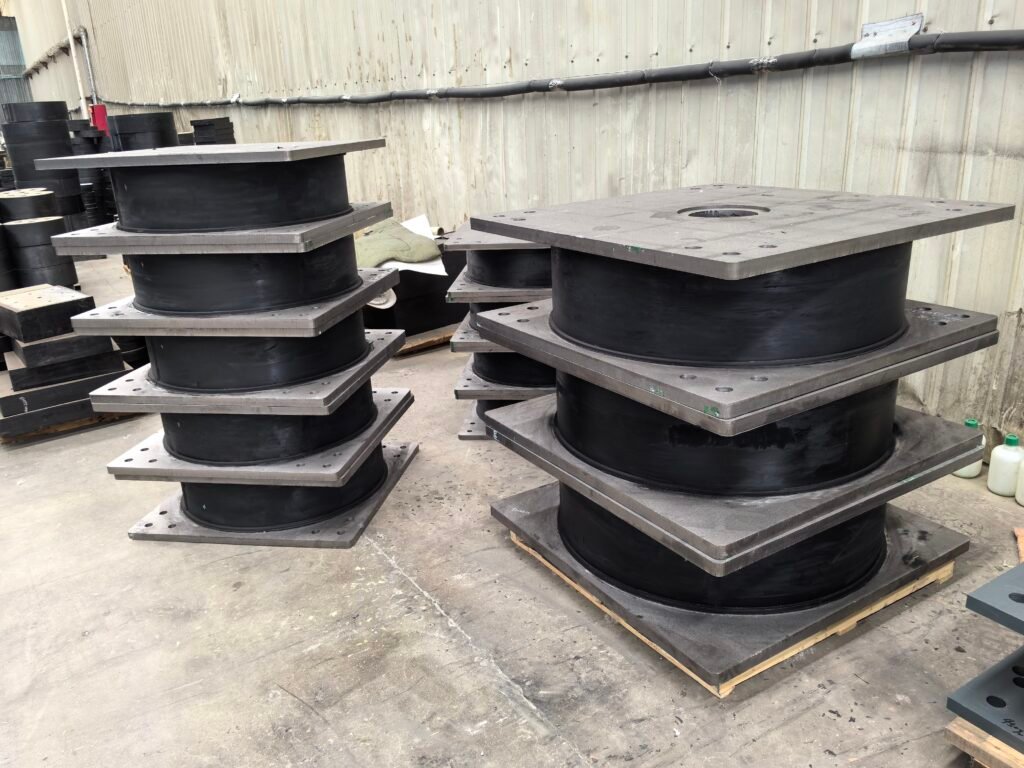
Seismic isolation rubber bearings, serving as a core component in modern seismic engineering, have revolutionized structural safety with their exceptional performance. Their advantages are primarily demonstrated in the following aspects.
Firstly, they effectively mitigate earthquake impacts. By incorporating a flexible horizontal layer, these bearings decouple the superstructure from ground motion, absorbing and dissipating seismic energy. This can dramatically reduce the seismic forces transferred to the structure to as low as 1/4 to 1/8 of the original input, thereby ensuring the safety of the main building during an earthquake.
Secondly, they possess excellent load-bearing and deformation capabilities. The bearing is constructed with alternating layers of steel plates and rubber sheets. The steel plates provide high vertical load-bearing capacity to support the building’s weight, while the rubber layers allow for significant horizontal displacement, effectively accommodating daily movements from thermal expansion and wind loads.
Finally, they offer stable performance and remarkable durability. The rubber material exhibits good resistance to aging and fatigue, ensuring the bearing functions reliably throughout the building’s designed service life with minimal maintenance. Furthermore, its design concept is clear, and installation is relatively straightforward, providing engineers and architects with a reliable and cost-effective seismic solution.
In summary, with their highly efficient isolation effect, robust mechanical properties, and long-term durability, seismic isolation rubber bearings have become a key technology for safeguarding lives and property and achieving seismic resilience in construction.
What other advantages are you aware of?