
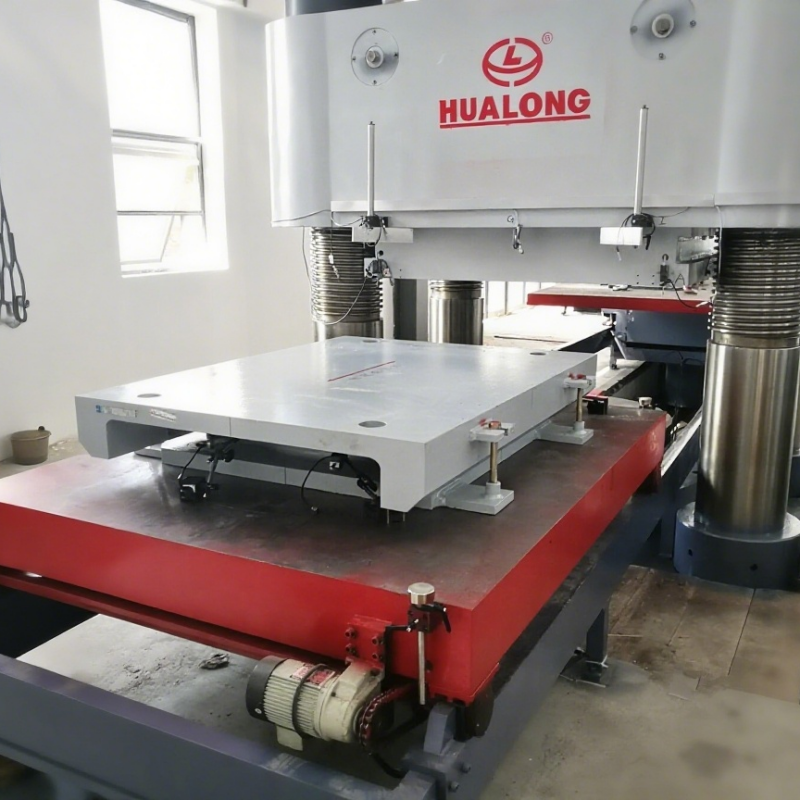
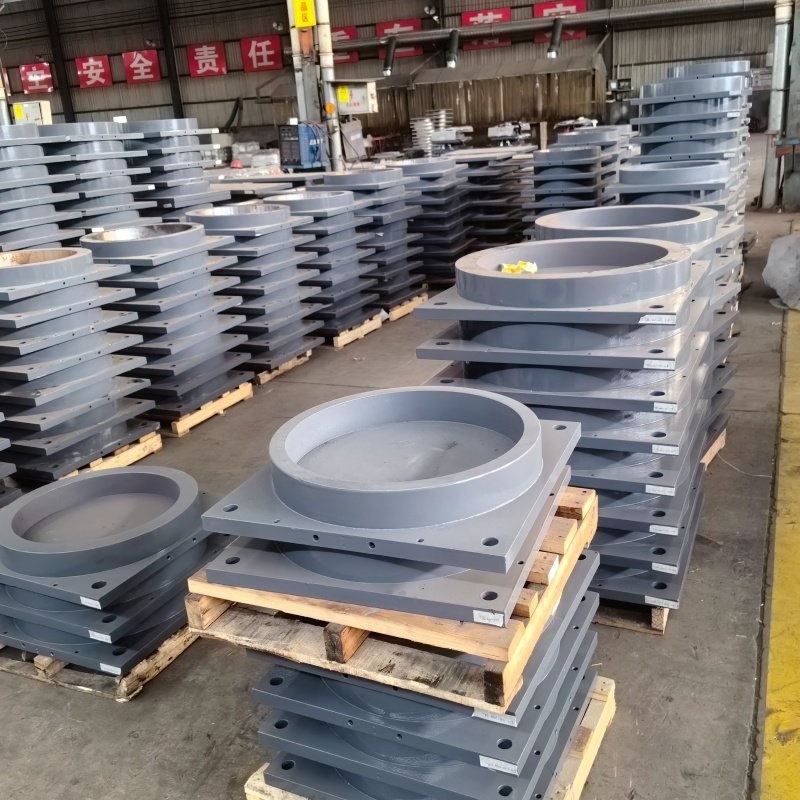
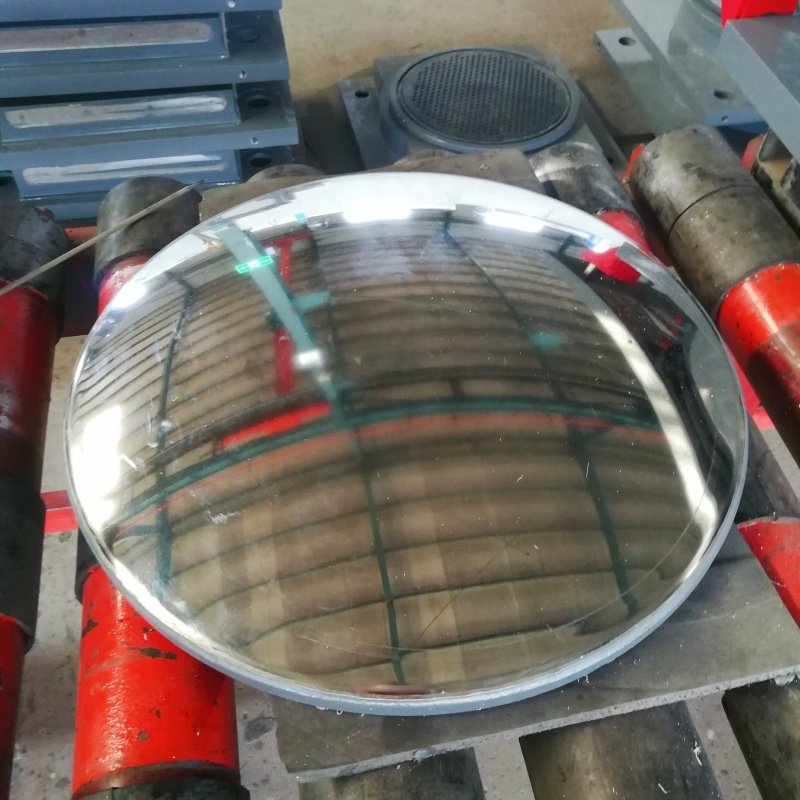
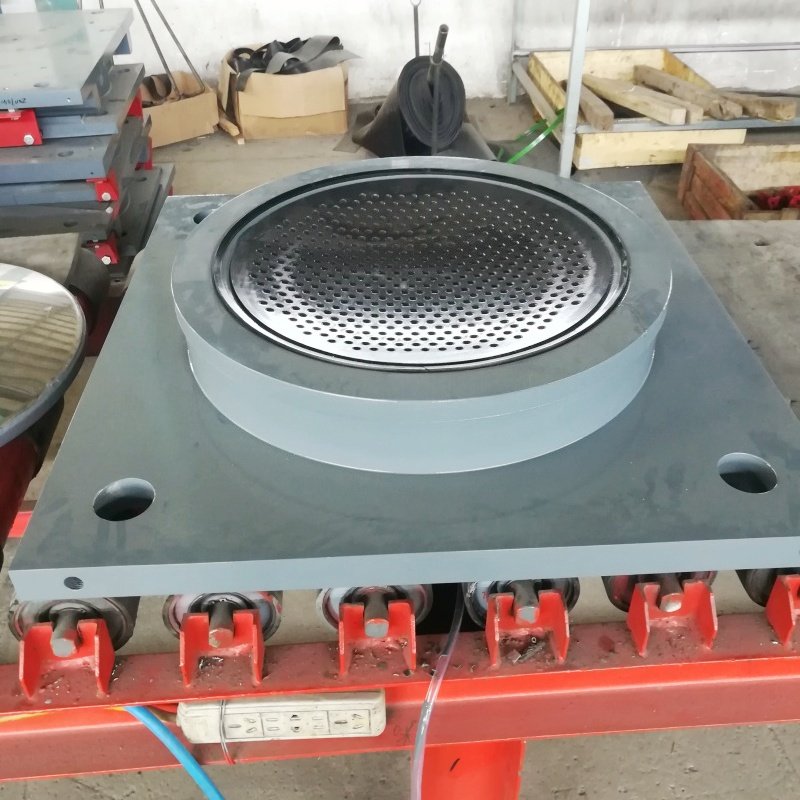
Spherical Bearings consist of an upper bearing plate, a lower bearing plate, a convex intermediate plate and two polytetrafluoroethylene (PTFE) plates of different shapes. A concave spherical surface is machined in the middle of the lower bearing plate, which corresponds to the convex intermediate plate. An arc-shaped PTFE plate is lined between them, and the rotation of the beam end is achieved through the sliding of the spherical surfaces. The stainless steel on the upper bearing plate and another PTFE plate on the intermediate steel plate form a second sliding surface, which accommodates the expansion and contraction displacement of the beam body caused by temperature difference and other factors.
Spherical bearings feature reliable force transmission and consistent rotational performance in all directions. They not only inherit the advantages of pot bearings such as high load-bearing capacity and large horizontal displacement, but also can meet the requirements of large rotation angles, making them suitable for wide bridges and curved bridges. Since rubber components are not used in pressure-bearing parts, there is no impact from issues such as low-temperature brittleness of rubber, so they are especially applicable to low-temperature areas.
Specification Series
With the continuous maturity of design and increasingly extensive application of spherical bearings, the main series include QZ series, KLQZ series, QZ (09T) series, JQZ (Type I, II, III) series, GCQZ (Type I, II, III) series, GQZ series, LQZ series, CGQZ series, XQZ series, LSQZ series, etc.
Classification
Spherical bearings are classified by structural form into: fixed bearings, unidirectional sliding bearings and bidirectional sliding bearings.
Spherical bearings are classified by applicable temperature into: normal type (-25℃~60℃) and cold-resistant type (-40℃~60℃).
Technical Performance
Vertical load-bearing capacity: 500KN ~ 60000KN
Designed rotation angle of bearing: 0.01rad ~ 0.05rad (can be increased as required)
Designed displacement of bearing: ±50mm, ±100mm, ±150mm, ±200mm (can be increased as required)
Horizontal force: 10% of the bearing reaction force (can be increased as required)
Standards
Complying with BS EN 1337, KS 4424, AASHO, ISO or other customized standards