
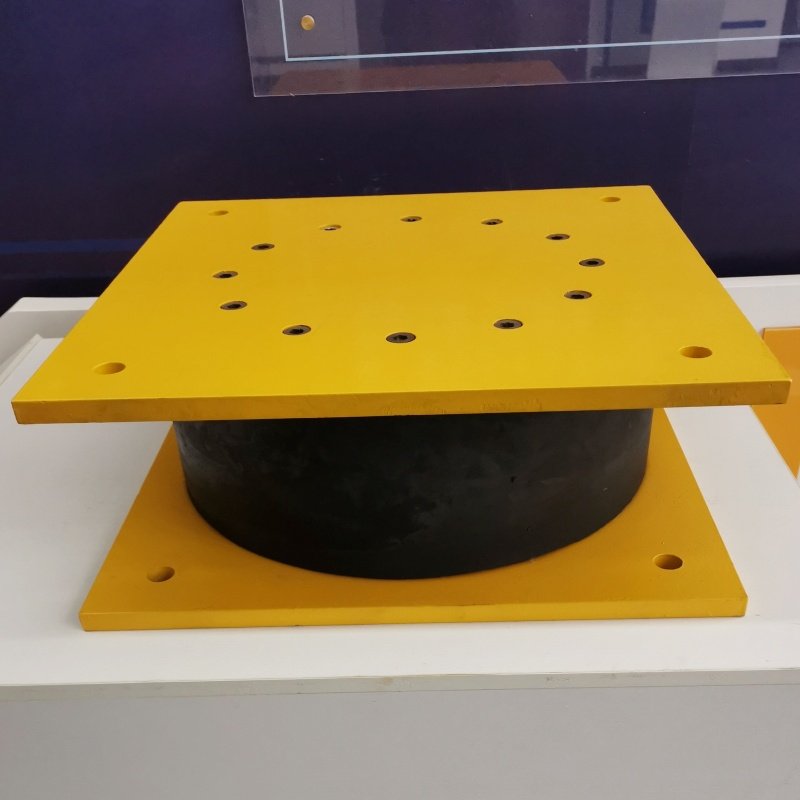
Lead Rubber Bearing | Seismic Lead Core Rubber Bearing for Bridges & Buildings
1. Product Overview of Lead Rubber Bearing (LRB)
Premium seismic isolation rubber bearing manufactured by Hebei Guchen Engineering Rubber Co., Ltd., widely used for bridge and building anti-earthquake protection.
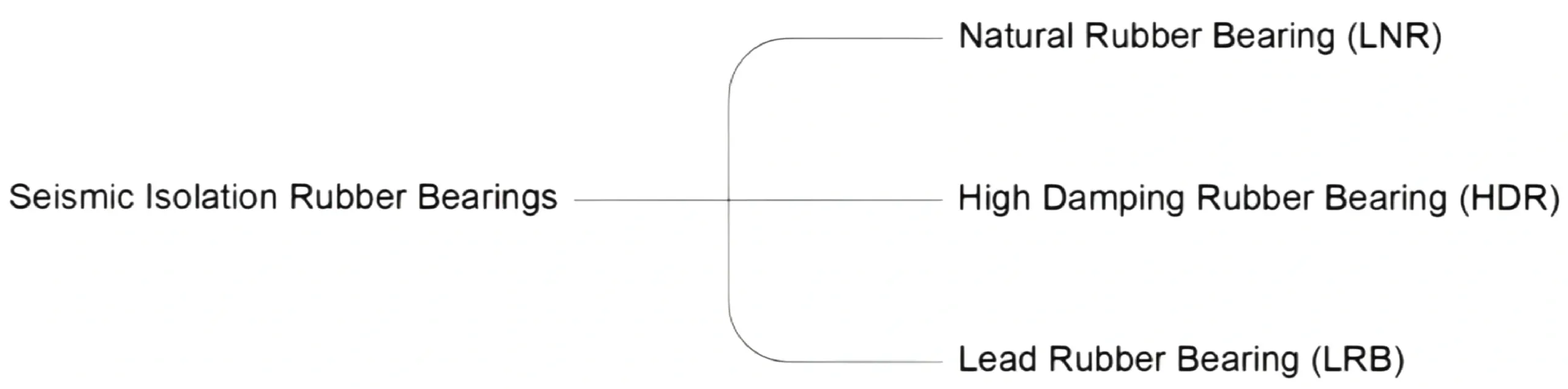 Seismic Isolation Rubber Bearings Product Classification Chart
Our lead rubber bearings (LRB) are divided into bridge lead rubber bearings and building lead rubber bearings. Bridge-type LRB adopts four small lead cores in round or square shape; building-type LRB is normally circular with one large central lead core for stable seismic isolation performance.
Structural Diagram of Lead Rubber Bearing (LRB) for Highway Bridges
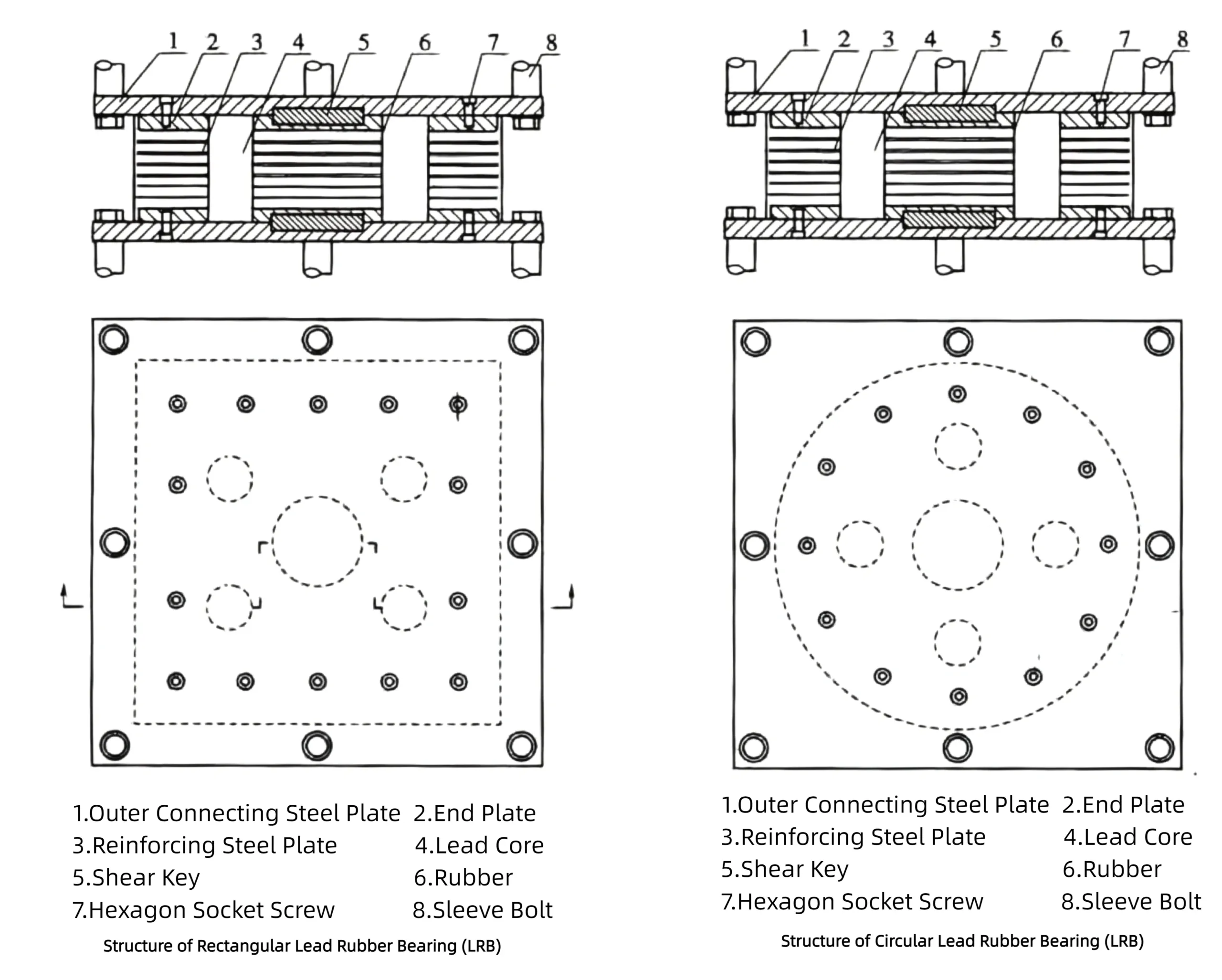 Rectangular & Circular Lead Rubber Bearing (LRB) Structure Diagrams for Highway Bridges with Component Labels
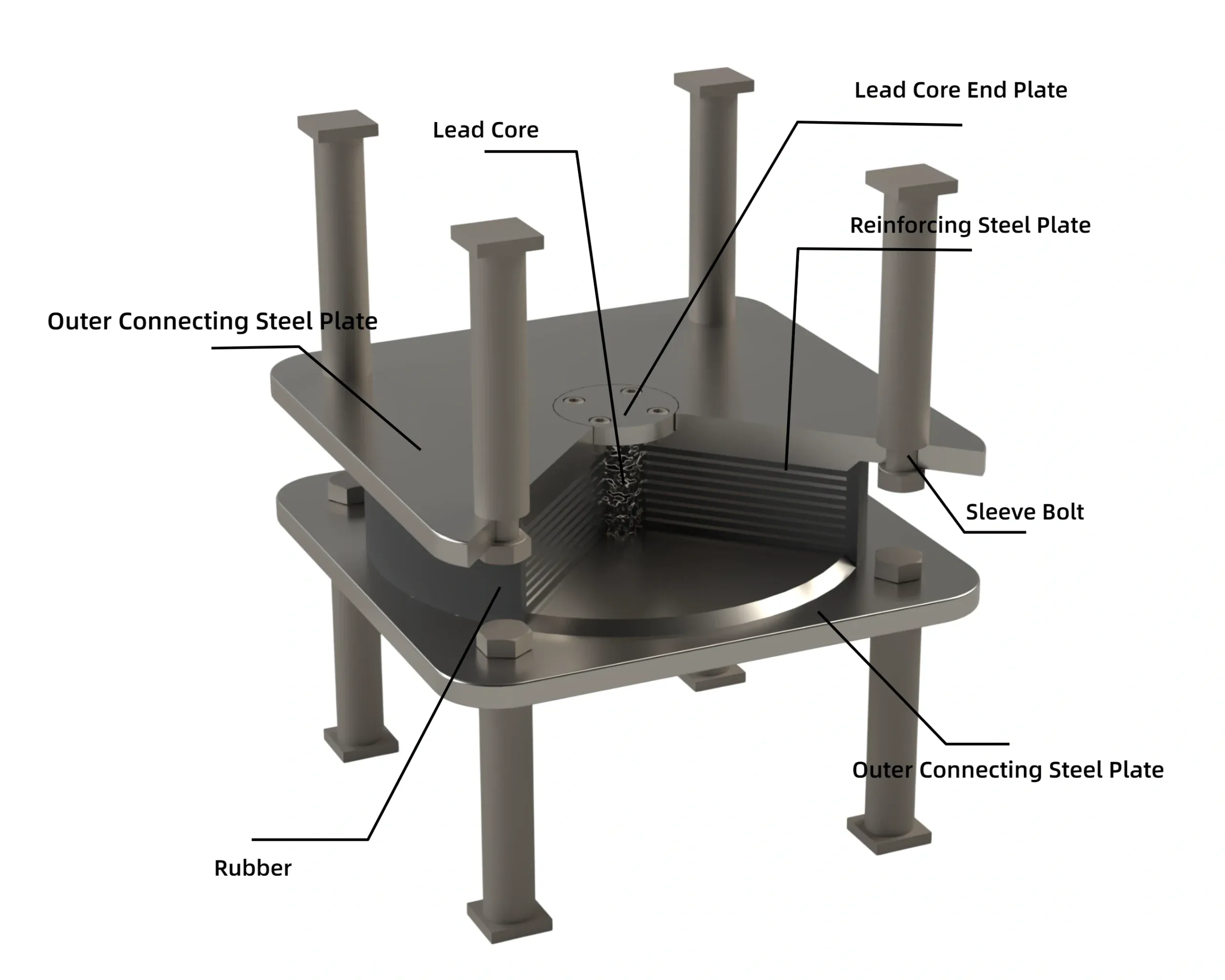 Internal Structure Diagram of Lead Rubber Bearing (LRB) for Buildings
1.1 Load Transfer Principle of LRB Bearing
The vertical load transfer process of the LRB series lead rubber bearing:
The seismic horizontal load transfer process of the LRB series lead rubber bearing:
2. Product Features of Lead Rubber Bearing (LRB)
- Stable vertical stiffness ensures excellent vertical load-bearing performance.
- Moderate horizontal stiffness meets both seismic isolation and conventional displacement requirements.
- Built-in lead core provides outstanding damping effect and superior energy dissipation capacity.
- Made of high-quality natural rubber, suitable for a wide range of temperature environments.
- Adjustable lead core area allows flexible adjustment of the bearing’s damping ratio.
- Easy to install, inspect, maintain and replace, with low long-term operation and maintenance costs.
3. Factory Test Items for Lead Rubber Bearing (LRB)
All our lead rubber bearings are strictly tested before delivery to guarantee seismic safety:
| Performance | Test Items |
|---|---|
| Compression & Rotation Performance | Vertical Compression Stiffness, Compression Displacement |
| Shear Performance | Horizontal Equivalent Stiffness, Post-Yield Stiffness, Equivalent Damping Ratio |
| Tensile Performance | Ultimate Tensile Load, Shear Strain at Tensile Failure or Yield |
4. On-site Construction of LRB Seismic Bearing
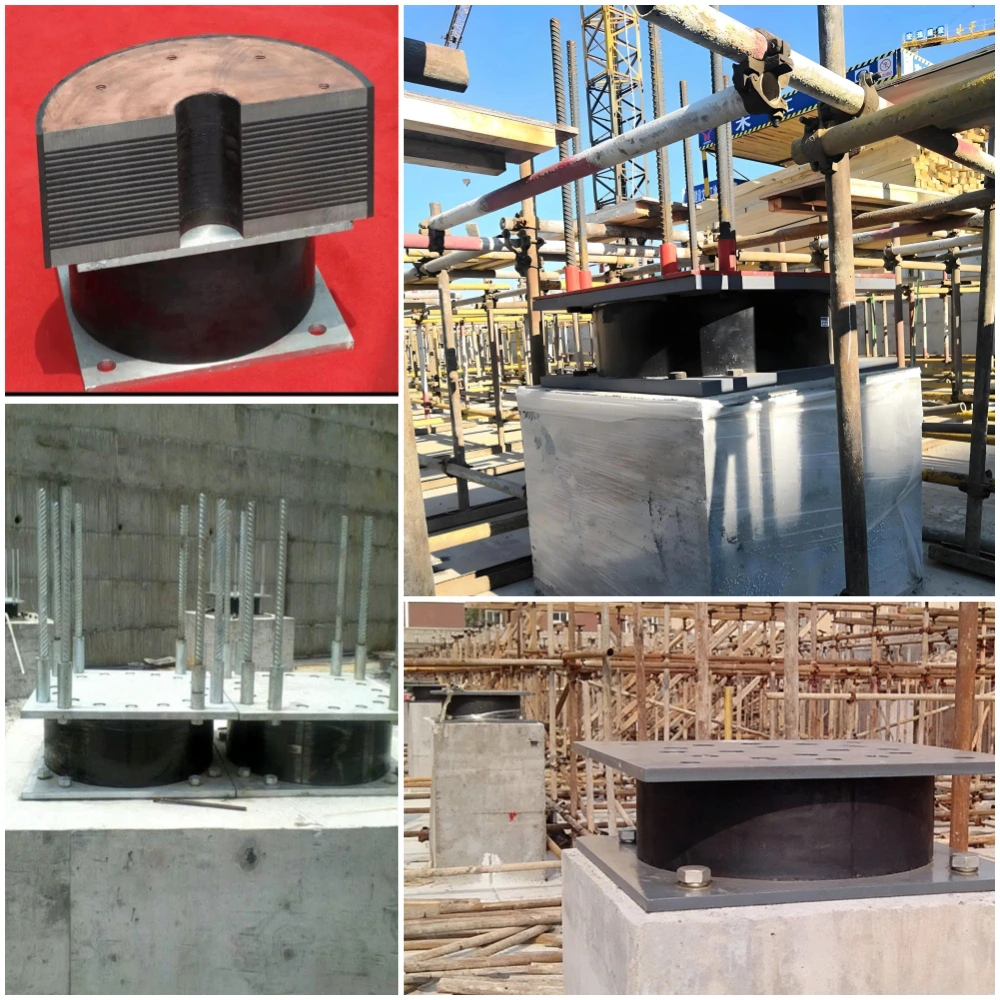 Construction Photos of Lead Rubber Bearing (LRB)
Custom & OEM Service
Hebei Guchen provides customized Lead Rubber Bearing (LRB) with different sizes, damping ratios and shapes for global seismic isolation projects. Factory direct supply, fast delivery and professional technical support.