
Elastomeric Bridge Expansion Joint – Slab Seal Type, Movement ≤30-150mm (B-30 to B-150)
Our elastomeric bridge expansion joint (also known as slab seal expansion joint or reinforced rubber expansion joint) is a high-performance, waterproof sealing system designed to accommodate thermal expansion, contraction, and shear movement in concrete and steel bridges. Available in five standard models – B-30, B-45, B-60, B-100, and B-150 – with total movement capacities from ≤30mm up to ≤150mm, these joints are ideal for medium‑span highway bridges, pedestrian overpasses, parking decks, and culverts. Made from premium natural rubber (or optional neoprene/EPDM) with multiple internal steel plates, they offer exceptional durability, load distribution, and a clean, low‑profile surface.
What is an Elastomeric Bridge Expansion Joint?
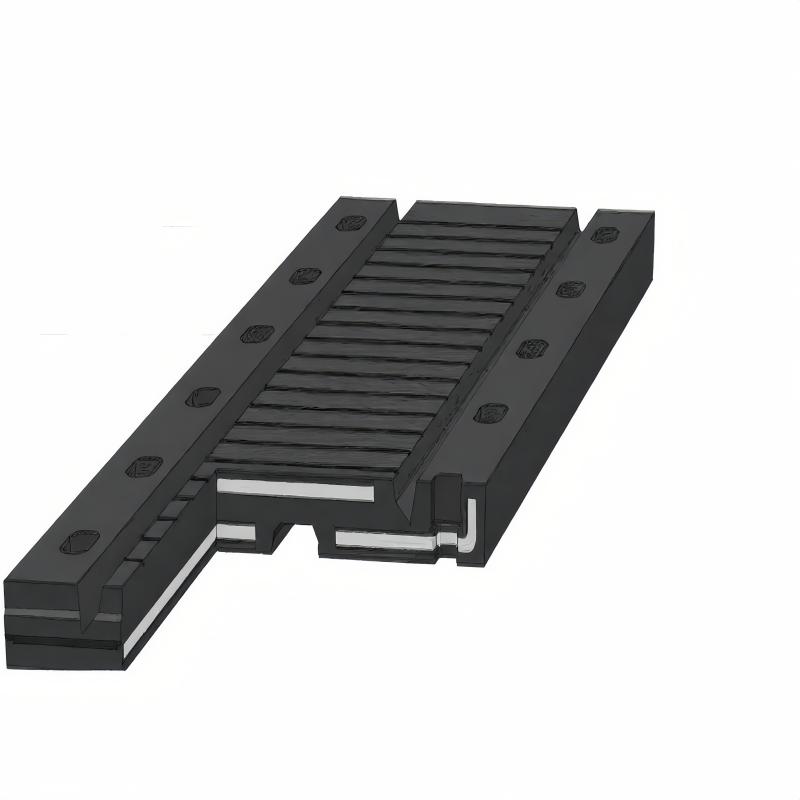
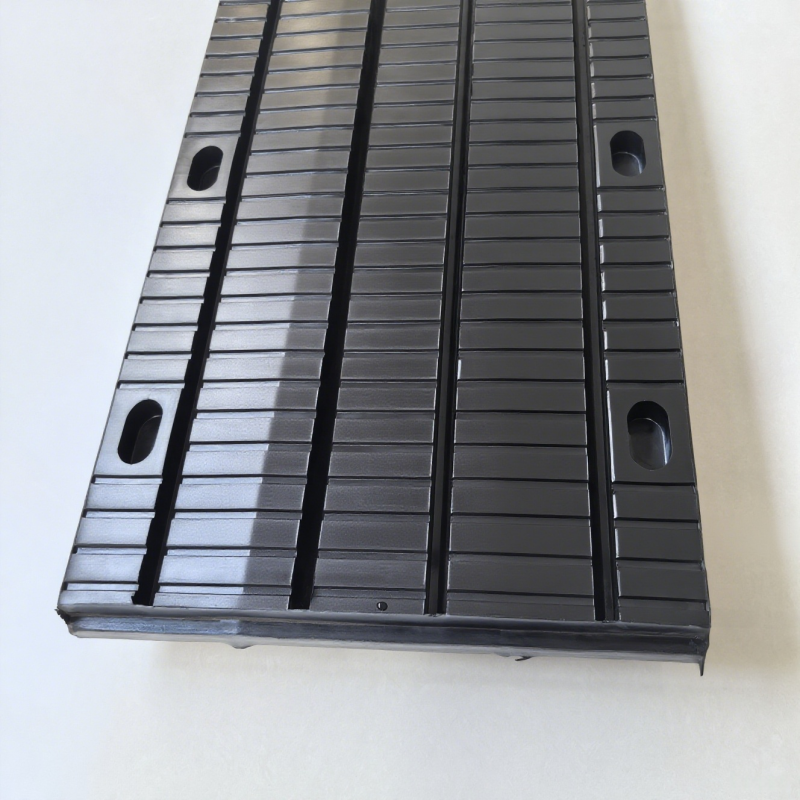
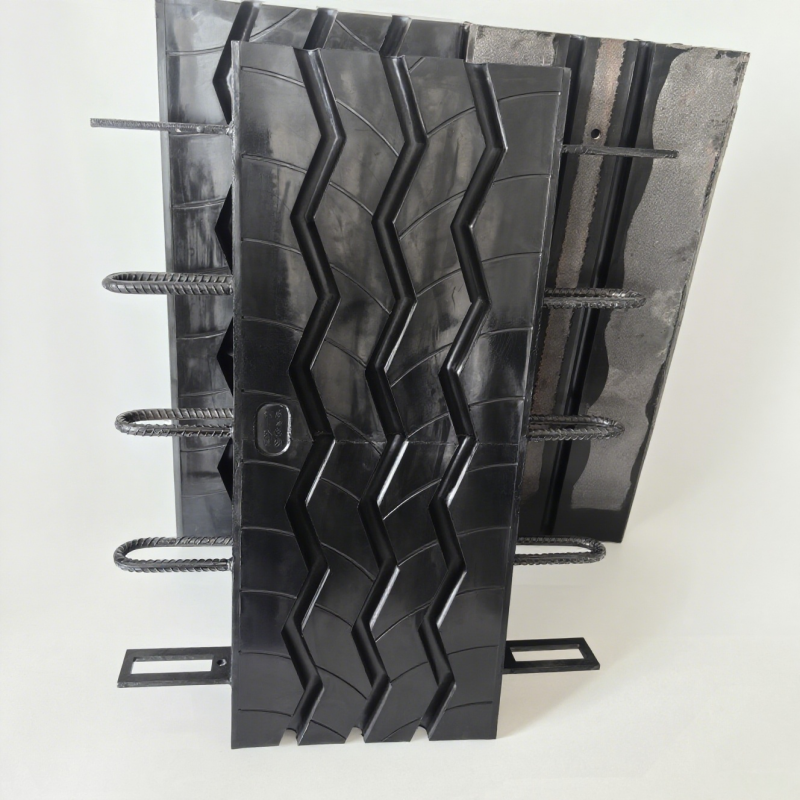
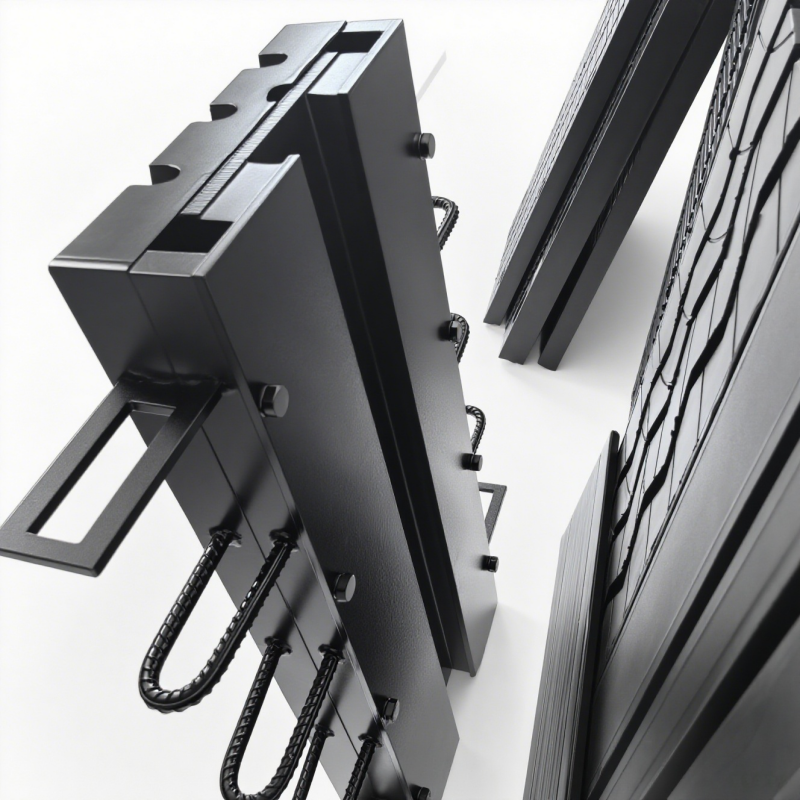
An elastomeric bridge expansion joint is a pre‑moulded rubber unit reinforced with steel plates. It is installed between bridge spans or between span and abutment to absorb movement caused by temperature changes, traffic loads, and seismic activity. The rubber body allows rotational and translational movement through shear deformation, while steel plates provide dimensional stability and load transfer. This slab‑seal type joint is waterproof, low‑maintenance, and quiet under traffic.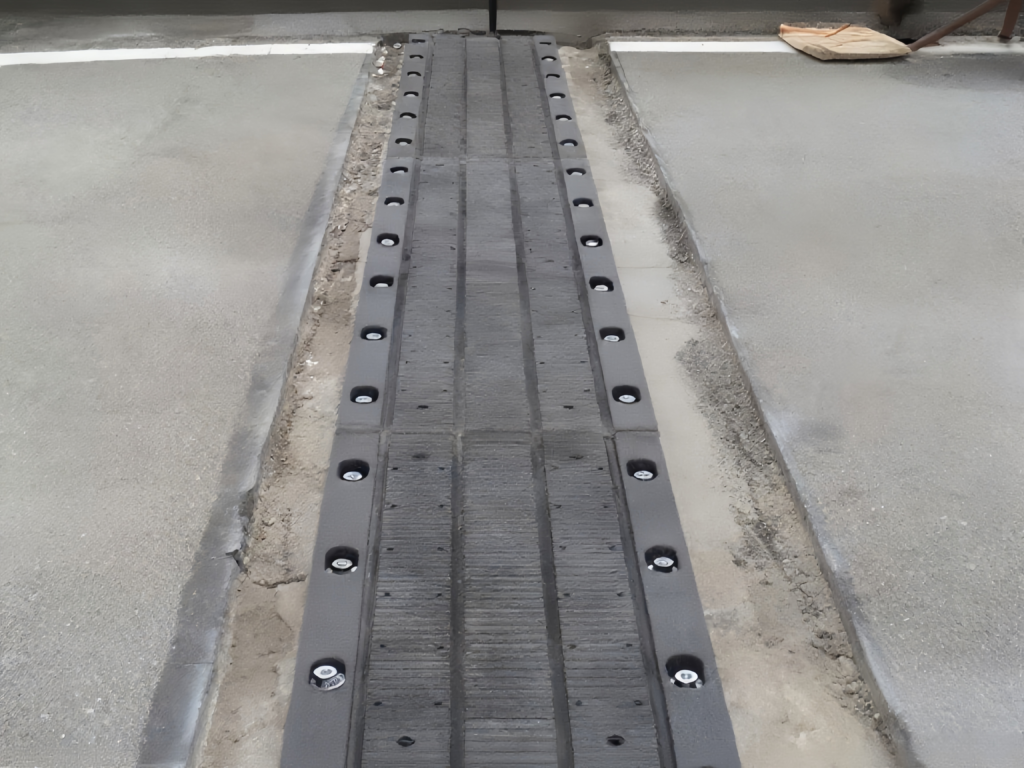
Key Features
- Steel‑reinforced elastomeric construction – Multiple internal steel plates ensure uniform load distribution and prevent rubber extrusion.
- Precise movement capacity – Available for total movements from 30mm up to 150mm, covering most medium‑span bridges.
- Waterproof sealing – Solid rubber profile prevents water and debris ingress, protecting the substructure.
- Shear deformation capability – Absorbs both longitudinal and transverse movements.
- Low maintenance – No moving parts or mechanical fasteners that wear out.
- Weather & ozone resistant – Standard natural rubber; optional neoprene (CR) or EPDM available.
- Easy installation – One‑piece sections bonded into the bridge deck using epoxy mortar.
- Quiet operation – Solid rubber surface reduces noise compared to finger‑type joints.
Standard Models & Specifications
The table below lists our standard elastomeric bridge expansion joint models. Custom sizes and movement capacities are available upon request.
| Model | Dimensions (Width × Height × Length) mm | Total Movement Capacity (mm) |
|---|---|---|
| B-30 series | 230 × 35 × 1000 | ≤30 |
| B-45 series | 250 × 45 × 1000 | ≤45 |
| B-60 series | 400 × 40 × 1000 | ≤60 |
| B-100 series | 550 × 54 × 1000 | ≤100 |
| B-150 series | 700 × 80 × 1000 | ≤150 |
Note: Standard length is 1000mm (1 meter). Sections can be joined to achieve any required total length. Custom widths, heights, and movement capacities are available. Please send your specification for a quotation.
Technical Specifications (General)
| Parameter | Value |
|---|---|
| Rubber material (standard) | Natural rubber (NR) – alternative: Neoprene (CR), EPDM |
| Steel plates | Mild steel, hot‑dip galvanised or epoxy coated |
| Hardness (Shore A) | 60 ± 5 |
| Tensile strength (MPa) | ≥ 15 |
| Ultimate elongation (%) | ≥ 400 |
| Operating temperature (°C) | -25 to +60 (natural rubber); -40 to +80 (EPDM) |
| Standard compliance | AASHTO, ASTM D 5973, BS 5400, EN 1337‑4, JT/T 327 |
Applications
Our elastomeric bridge expansion joints are widely used in:
- Concrete highway bridges – Thermal movement absorption on bridge decks (medium span).
- Pedestrian bridges & flyovers – Low noise, smooth surface.
- Parking decks & ramp structures – Waterproof sealing for vehicle traffic.
- Culverts and box culverts – Joint sealing for water‑tightness.
- Steel girder bridges – Accommodating expansion between spans.
- Prestressed concrete bridges – Handling creep and shrinkage effects.
Installation Guide (Overview)
- Prepare joint gap – Ensure gap width and depth match the selected model (see dimensions). Clean and remove debris.
- Apply bonding agent – Prime the concrete surfaces with epoxy or polyurethane adhesive.
- Place the joint – Position the elastomeric joint into the gap, aligning top surface flush with deck.
- Fix temporarily – Use metal brackets or nails to hold the joint in place during curing.
- Pour epoxy mortar – Fill side channels with high‑strength epoxy concrete. Ensure full encapsulation.
- Compact and cure – Allow 24‑48 hours for full strength before opening to traffic.
📌 Note: Full installation details and custom drawings available upon request.
Frequently Asked Questions (FAQ)
Q: How to select the correct model (B-30 to B-150)?
A: Calculate the total expected movement (thermal expansion + contraction + shrinkage + creep). Choose a model whose total movement capacity is equal to or greater than your calculated movement. For example, if your bridge requires ≤45mm, select B-45. If movement is 80mm, select B-100 (not B-60).
Q: What is the difference between elastomeric joint and strip seal joint?
A: Elastomeric (slab seal) joints are solid rubber units reinforced with steel plates. They absorb movement through shear deformation of the rubber. Strip seal joints use a separate rubber gland compressed between steel edge beams. Elastomeric joints are generally easier to install and have a cleaner profile, while strip seals allow larger movements.
Q: Are the steel plates completely protected from corrosion?
A: Yes. Our steel plates are either hot‑dip galvanised or epoxy‑coated, and fully encapsulated by rubber, ensuring no contact with water or de‑icing salts.
Q: Can lengths be joined to exceed 1 meter?
A: Yes. Standard sections are 1000mm long. During installation, multiple sections are placed end‑to‑end to achieve the required total length. No special jointing compound is needed – the epoxy mortar fully encapsulates the joints.
Q: How long does the joint last?
A: With proper installation and normal traffic loads, service life exceeds 20‑30 years. Rubber aging is minimal, and the joint requires no routine mechanical maintenance.
Q: Do you offer custom models outside B-30 to B-150?
A: Yes. We can produce elastomeric joints with movement capacities up to 330mm (modular design) and custom dimensions. Provide your requirements.
Why Choose Guchen Elastomeric Bridge Expansion Joints?
As a professional bridge expansion joint manufacturer with over 15 years of experience, we offer:
- Premium natural rubber or neoprene – high tensile strength and elongation.
- Full steel plate encapsulation – no exposed metal, no corrosion.
- Strict quality control – each joint tested for movement and water tightness.
- Compliance with AASHTO, ASTM, BS, EN, and Chinese standards.
- Standard models B-30 to B-150 in stock – ready to ship.
- Customized movement ranges, lengths, and rubber compounds.
- Factory direct prices with fast global shipping.
- Technical support, installation guidance, and after‑sales service.
📞 Get a quote for elastomeric bridge expansion joints – Send your required movement range, deck thickness, and project details (or specify model B-30 to B-150). We will reply within 24 hours.