
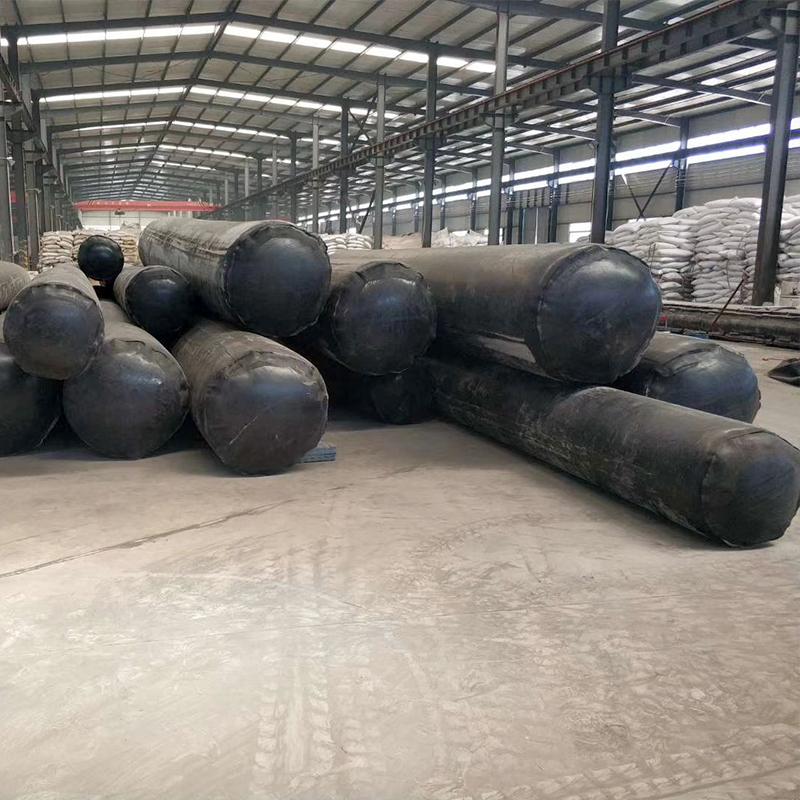
Rubber Inflatable Culvert Balloon – Low Pressure 0.01-0.04 MPa, 100-3000mm Diameter, Reusable Core Mold
Our rubber inflatable culvert balloon (also known as inflatable core mold, rubber inflatable mandrel, or pneumatic formwork) is a high-quality, reusable inner mold designed to form hollow cavities in concrete structures. Operating at a safe low pressure of 0.01–0.04 MPa (1.5–5.8 psi) and available for diameters or cross-section dimensions from 100mm to 3000mm, it is ideal for casting hollow-core bridge beams, box culverts, concrete pipes, tunnel linings, and building columns. Made from natural rubber reinforced with multiple layers of synthetic fiber fabric, it offers excellent elasticity, air tightness, and durability for hundreds of reuse cycles.
What is a Rubber Inflatable Culvert Balloon?
A rubber inflatable culvert balloon is a flexible, cylindrical (or custom-shaped) bladder that serves as a removable formwork for creating hollow sections in concrete. It is placed inside the reinforcement cage, inflated to a low pressure (0.01–0.04 MPa), and then concrete is poured around it. After the concrete has set, the balloon is deflated and withdrawn, leaving a clean, precise internal cavity. This low-pressure design ensures safety and prevents over-expansion, making it suitable for thin-walled or delicate formwork applications.
Key Features
- Low working pressure – 0.01–0.04 MPa (1.5–5.8 psi) – safe, energy-efficient, and reduces stress on concrete.
- Wide size range – Diameters or side lengths from 100mm up to 3000mm (3 meters).
- Reusable – Designed for 100+ uses with proper care, significantly reducing formwork costs.
- Lightweight & easy to handle – One person can install and remove the balloon; no heavy equipment needed.
- Smooth cavity surface – Rubber provides a uniform, bubble-free finish.
- High tensile strength – Reinforced with multiple layers of polyester or nylon fabric.
- Excellent elasticity & air tightness – Maintains pressure during concrete pouring.
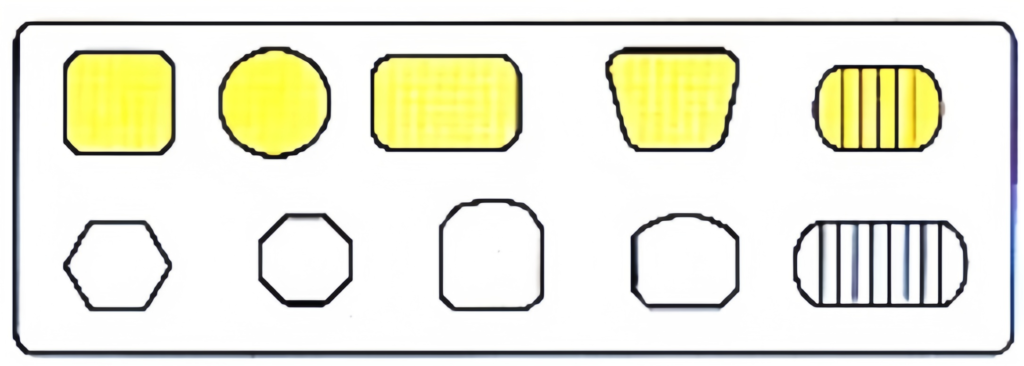
- Available in various shapes – Round, oval, octagonal, rectangular, square, and custom profiles.

Figure: Five common cross-sectional shapes of rubber inflatable culvert balloon (core mold)
Technical Specifications
All our inflatable core molds operate at a safe low pressure of 0.01–0.04 MPa. The table below shows the typical size range. Custom dimensions are available upon request.
| Parameter | Typical Value / Range |
|---|---|
| Material | Natural rubber + polyester/nylon reinforcement (EPDM, NBR optional) |
| Working pressure (MPa) | 0.01 – 0.04 (1.5 – 5.8 psi) |
| Diameter or cross-section dimension (mm) | 100 – 3000 (custom up to 4000mm available) |
| Standard length (m) | 1 – 30 (longer lengths can be spliced or custom-made) |
| Wall thickness (mm) | 3 – 6 (depends on diameter and fabric layers) |
| Elongation at break (%) | ≥ 350 |
| Operating temperature (°C) | -15 to +80 (EPDM version: -40 to +120) |
| Air valve type | Schrader / truck valve / custom |
Note: Custom diameters, lengths, and cross-sectional shapes (octagonal, elliptical, rectangular, square) are available. Send your drawing for a quotation.
Applications
Our low-pressure rubber inflatable culvert balloons are widely used in:
- Bridge construction – Hollow-core precast/prestressed concrete beams for highway and railway bridges.
- Culvert & box culvert casting – Creating hollow passages in underpasses, drainage culverts, and utility tunnels.
- Concrete pipe manufacturing – Forming hollow cores in large-diameter concrete pipes (100-3000mm).
- Tunnel lining – Temporary void forming or secondary lining.
- Building construction – Hollow concrete slabs, transfer beams, columns, and foundation piles.
- Water & sewage structures – Manholes, tanks, and channels.

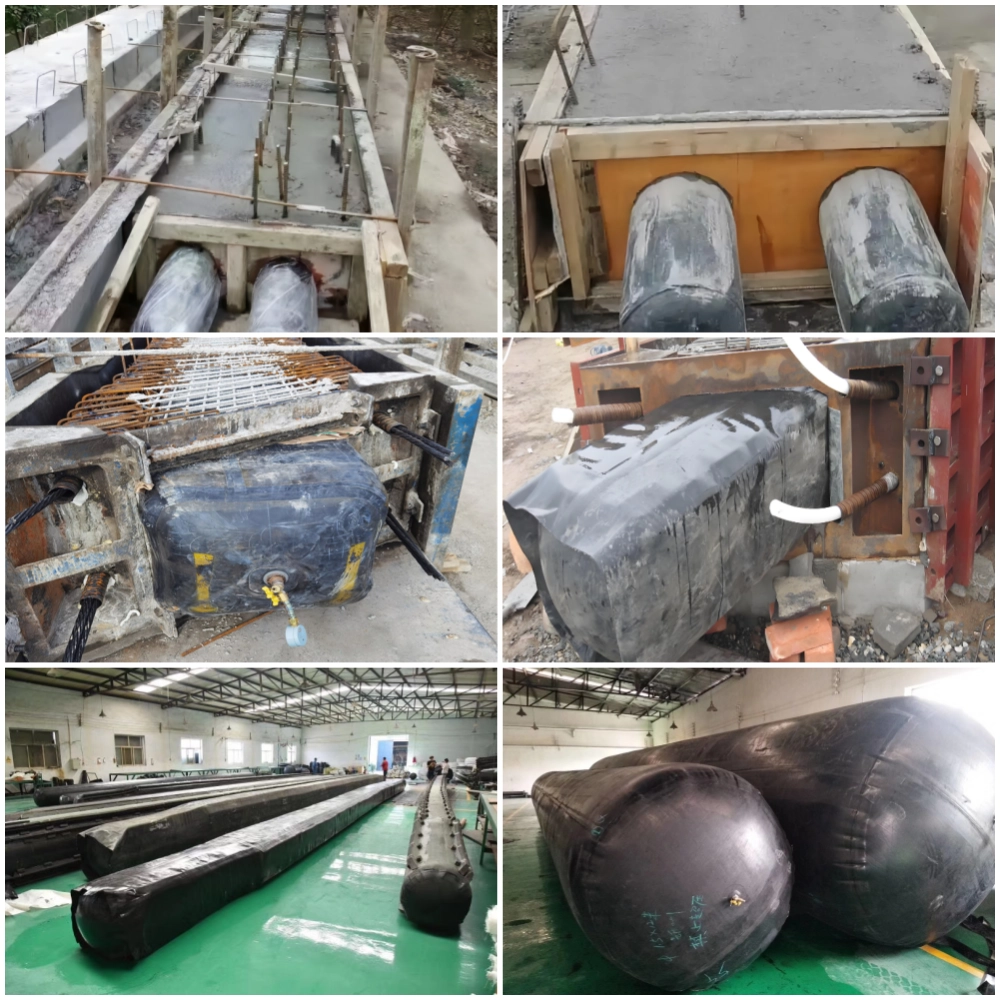
Figure: Rubber inflatable culvert balloon being inflated inside reinforcement cage for hollow core formation
How to Use – Step-by-Step Guide
- Inspect & prepare – Check the balloon for any damage. Apply a release agent (form oil) evenly over the surface to prevent concrete adhesion.
- Place the deflated balloon – Insert the balloon into the reinforcement cage. Ensure it is centered and straight.
- Inflate – Connect an air compressor to the valve. Inflate slowly to the recommended working pressure (0.01–0.04 MPa). Do not exceed 0.04 MPa.
- Check pressure – Once inflated, close the valve and verify no air leaks. Maintain pressure during concrete pouring.
- Pour concrete – Pour concrete symmetrically around the balloon to avoid displacement. Vibrate carefully without touching the balloon.
- Wait for curing – Allow the concrete to reach initial set (typically 4–12 hours depending on mix and temperature).
- Deflate & remove – Open the valve to release air. Once fully deflated, pull the balloon out gently.
- Clean & store – Wash the balloon with water to remove residual concrete. Dry and store in a cool, shaded place away from sharp objects.
Frequently Asked Questions (FAQ)
Q: What is the difference between a rubber inflatable culvert balloon and a pipe plug?
A: They serve opposite purposes. A culvert balloon (core mold) is used as an inner mold to create a hollow cavity. A pipe plug is used to block or seal an existing pipe. Our culvert balloon operates at a lower pressure (0.01-0.04 MPa) compared to typical pipe plugs.
Q: How many times can I reuse the balloon?
A: With proper handling and storage (cleaning, avoiding sharp objects, and applying release agent), our balloons can be reused 100–200 times or more.
Q: Can the balloon be used in cold weather?
A: Yes, down to -15°C for natural rubber. For lower temperatures (down to -40°C), we recommend using EPDM material.
Q: What happens if the balloon loses pressure during concrete pouring?
A: Pressure loss can cause the balloon to shrink, resulting in a smaller cavity or deformation. Always monitor pressure and use a pressure-maintaining valve. If pressure drops, stop pouring and re-inflate.
Q: Do you offer custom shapes (octagonal, rectangular, square, etc.)?
A: Yes, we manufacture custom cross-sections based on your engineering drawings. Minimum order quantity may apply.
Q: How do I determine the correct size?
A: The balloon’s inflated diameter or side length should match the required inner dimension of your concrete cavity. Provide your project specifications, and we will recommend the appropriate model.
Why Choose Guchen Rubber Inflatable Culvert Balloons?
As a professional inflatable core mold manufacturer with over 15 years of experience, we offer:
- Low pressure design (0.01-0.04 MPa) – safe for all concrete types and easy on equipment.
- Wide size coverage from 100mm to 3000mm – one-stop solution for various projects.
- High-quality natural rubber with multiple fabric reinforcement layers.
- Precision vulcanization – ensures uniform wall thickness and air tightness.
- Custom shapes and sizes – we work from your drawings.
- Strict quality control – each balloon pressure-tested before shipping.
- Factory direct prices with fast worldwide shipping.
- Technical support – installation guides, pressure recommendations, and troubleshooting.
📞 Get a quote for rubber inflatable culvert balloons – Send your required inner diameter/side length (100-3000mm), shape (round, square, etc.), length, and quantity. We will reply within 24 hours.