
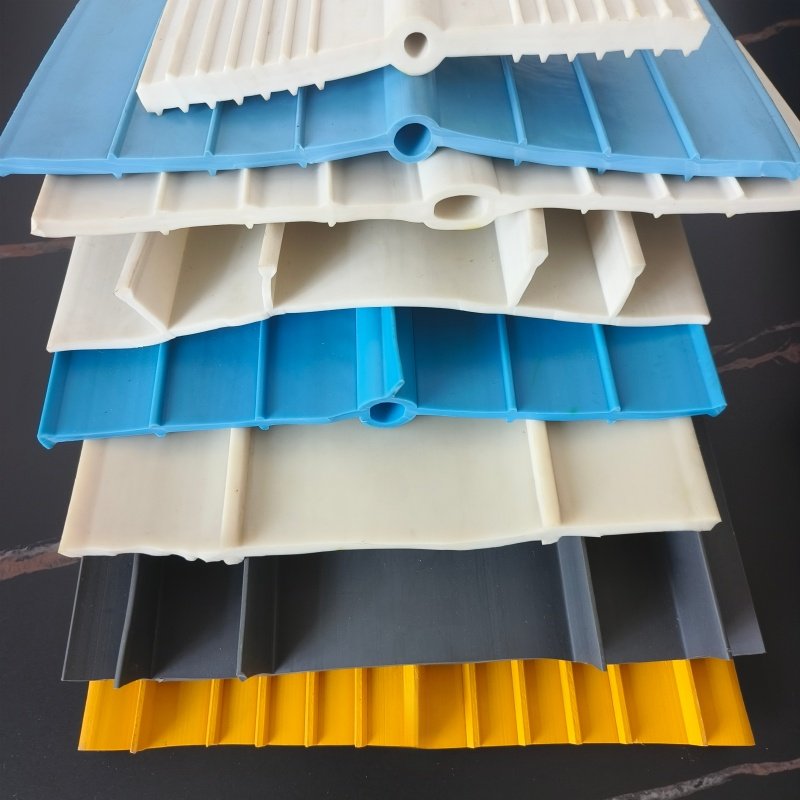
PVC Waterstop – Durable & Flexible Concrete Joint Seal for Bridges, Tunnels & Dams
Our PVC waterstop (polyvinyl chloride waterstop) is a high-performance sealing solution designed for concrete expansion and construction joints. It offers excellent chemical resistance, flexibility, and durability at a cost-effective price. Ideal for hydraulic structures, tunnels, bridges, swimming pools, and basements, our PVC waterstops comply with international standards such as ASTM D-412, DIN 7865, and GB 18173.1.
What is a PVC Waterstop?
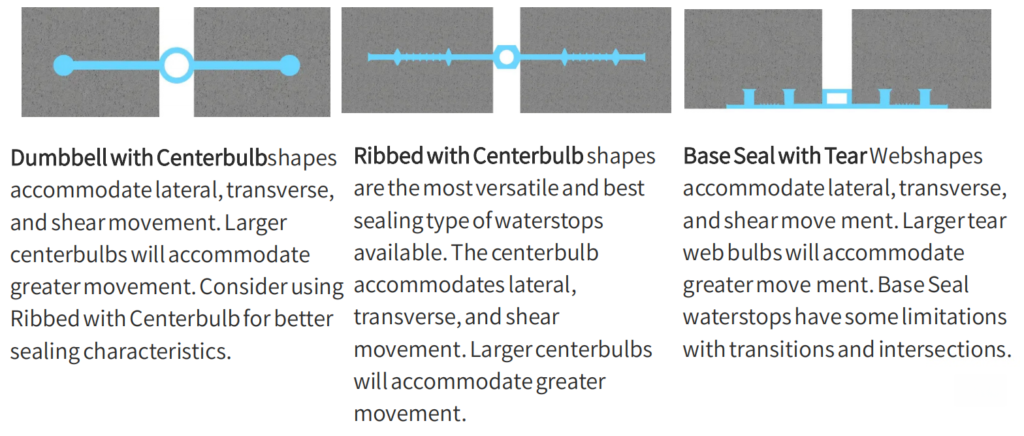
A PVC waterstop is a flexible strip made from virgin PVC resin, plasticizers, and stabilizers. It is installed in concrete joints to prevent water passage while accommodating joint movement due to thermal expansion, contraction, or settlement. The typical profile includes a center bulb for movement absorption and ribs or anchoring wings for secure bonding with concrete.
Compared to rubber waterstops, PVC waterstops offer better chemical resistance (especially against dilute acids and alkalis) and are more economical for large-scale projects. However, they have a narrower temperature range and lower elasticity than EPDM rubber.
Key Features of Our PVC Waterstop
- Excellent water sealing – Prevents water leakage under hydrostatic pressure up to 0.6 MPa.
- High flexibility – Accommodates joint movement of ±25% of nominal width.
- Chemical resistance – Resists dilute acids, alkalis, and sewage.
- Durable – Service life of 30+ years under normal conditions.
- Easy installation – Can be spliced by heat welding or with PVC solvent cement.
- Cost-effective – Lower material cost than rubber waterstops.
- Standards compliance – ASTM D-412, DIN 7865, GB 18173.1.
Types of PVC Waterstops We Supply
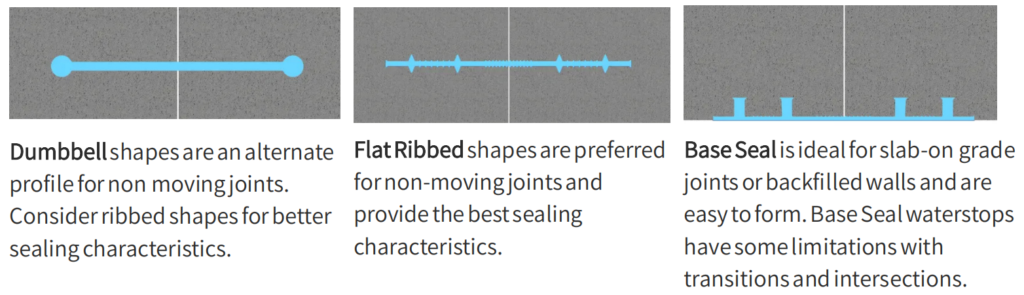
- Center-bulb PVC Waterstop – Most common type for expansion joints; central bulb allows movement.
- Dumbbell PVC Waterstop – Simple symmetrical profile for smaller joints or light-duty applications.
- Ribbed PVC Waterstop – Enhanced anchorage with multiple ribs on both sides.
- Corner PVC Waterstop – Pre-formed L-shaped or T-shaped for joints at intersections.
- Hydrophilic PVC Waterstop – Swells upon water contact (blend with hydrophilic additives).
Technical Specifications (Typical)
| No | Test Item(s) | Units | Technical Requirements | |
|---|---|---|---|---|
| 1 | Min tensile strength | MPa | 10 | |
| 2 | Min ultimate elongation | Percent | 200 | |
| 3 | Min tearing strength | KN/m | 50 | |
| 4 | Flexability of -25°C | / | No crack | |
| 5 | Hot air aging experiment(Experimental condition: 80℃,100Hours) | Appearance (100% elongation) | / | No crack |
| Tensile strength retention rate | Percent | 80 | ||
| Elongation at break retention rate | Percent | 70 | ||
| 6 | Alkaline resistant Ca(OH)2 Saturated solution (168h) | Tensile strength retention rate | Percent | 80 |
| Elongation at break retention rate | Percent | 80 | ||
Applications
Our PVC waterstops are widely used in the following structures:
- Hydraulic structures – Dams, reservoirs, canals, and water treatment plants.
- Tunnels & subways – Construction joints and settlement joints.
- Bridges – Expansion joints (for moderate movement).
- Swimming pools – Joints in pool walls and floors.
- Basements & underground parking – Preventing groundwater ingress.
- Wastewater treatment plants – Resistance to sewage and mild chemicals.

Figure: PVC waterstop installation during concrete construction
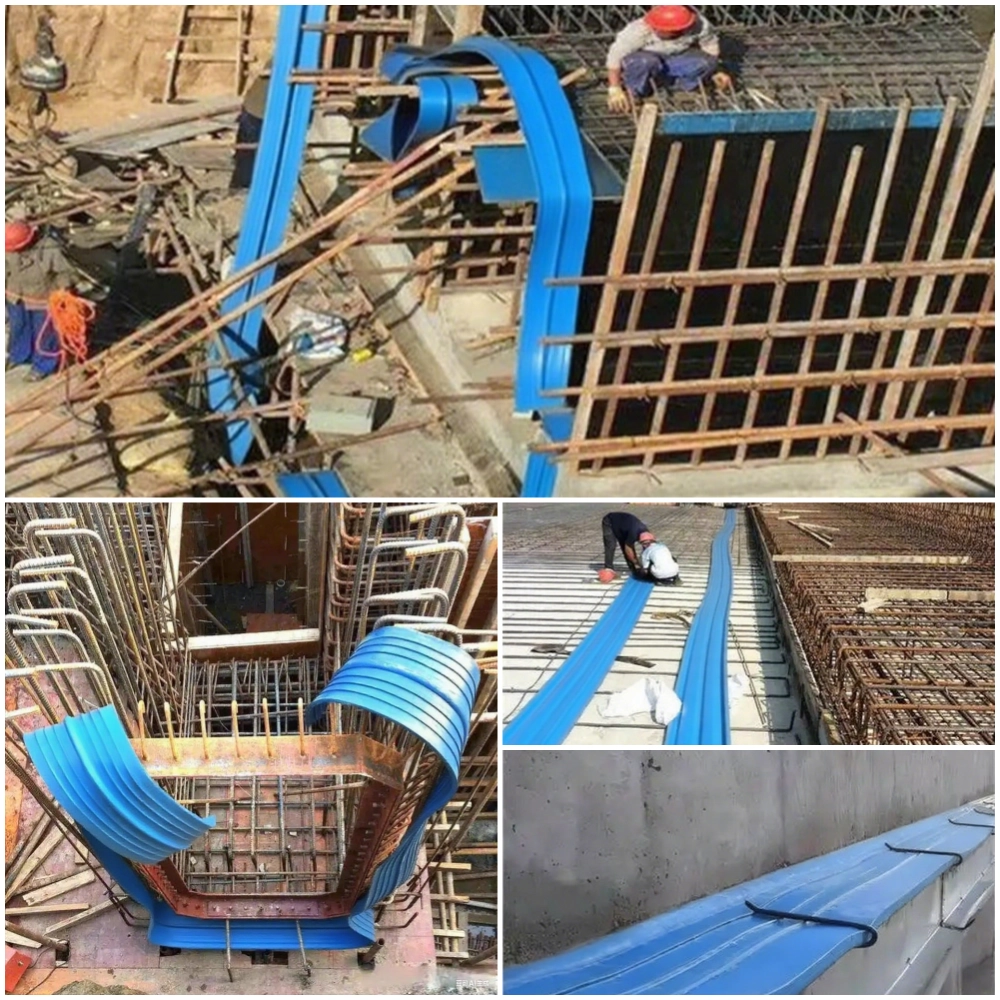
Installation Guide for PVC Waterstop
- Surface preparation: Clean the joint area, remove debris and oil. Ensure concrete surfaces are dry and sound.
- Positioning: Place the PVC waterstop so that the center bulb aligns exactly with the joint line. The ribs must be fully embedded into the concrete on both sides.
- Fixing: Use tie wires or rebar supports to hold the waterstop in place. Avoid piercing the waterstop.
- Splicing: Overlap ends by at least 100 mm and heat weld using a PVC welding gun or use PVC solvent cement. Ensure a watertight bond.
- Concrete pouring: Pour concrete carefully to avoid displacement. Ensure concrete fully surrounds the ribs and center bulb without voids.
- Curing: Cure concrete properly to prevent cracking near the waterstop.
Frequently Asked Questions (FAQ)
Q: What is the difference between PVC waterstop and rubber waterstop?
A: PVC waterstop is more economical and offers better chemical resistance to dilute acids/alkalis, but has a narrower temperature range (-30°C to +60°C) and lower elasticity. Rubber waterstop (EPDM/natural) provides better elasticity, wider temperature range (-45°C to +120°C), and higher tear strength, but is more expensive. Choose based on project requirements.
Q: How to install a PVC waterstop in concrete joints?
A: Refer to our installation guide above. Key steps: align center bulb with joint line, fix with tie wires, splice ends by heat welding, and pour concrete carefully.
Q: What is the price of PVC waterstop per meter?
A: Price depends on profile type, thickness, and quantity. Please contact us for a quote with your specification (drawing or dimensions). We offer factory-direct pricing.
Q: Can PVC waterstop be used for drinking water applications?
A: Yes, if made from non-toxic PVC compound. Our PVC waterstops can be produced with food-grade plasticizers upon request. Please specify your requirement.
Q: Do you offer custom PVC waterstop profiles?
A: Yes, we can manufacture custom shapes and sizes based on your drawings. Minimum order quantity applies. Send your specification for a quotation.
Why Choose Guchen PVC Waterstops?
As a professional PVC waterstop manufacturer and supplier with over 15 years of experience, we offer:
- 100% virgin PVC resin – no recycled content for consistent quality.
- Strict quality control – each batch tested for tensile strength, elongation, and hardness.
- Compliance with ASTM, DIN, and GB standards.
- Factory direct prices with fast delivery worldwide.
- Technical support, installation guidance, and after-sales service.
📞 Get a PVC waterstop quote – Send your joint details (width, movement, water pressure) and we will reply within 24 hours.